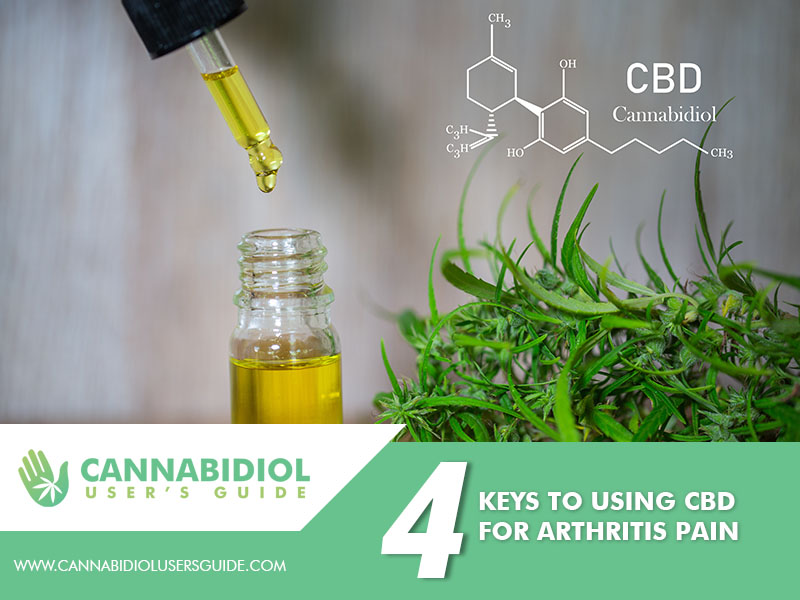


Everywhere you look today, CBD is offered as a way to relieve chronic pain, including pain from arthritis. According to a Gallup poll in 2019, about 14% of Americans report using CBD products, and the number one reason is pain. The Arthritis Foundation also conducted a poll and found that 29% of people reported using CBD. Since becoming legal in 2018, the popularity of CBD for pain relief has grown among adults of all age groups.
In this article, we'll be going over some major facts to know about using CBD as help for arthritis. First, we'll talk about CBD being used for arthritis and how the compound works in general. Then, we'll talk about some studies surrounding CBD and a few possible side effects. Finally, we'll talk about the forms you can find CBD in and the available ways to take them.

1
Using CBD For Arthritis
Arthritis is a chronic, often debilitating condition. There are over 100 forms of arthritis, with pain being a symptom of all of them. Treatment is aimed at reducing pain and stiffness and maintaining function, but not all types of arthritis are the same. What helps some forms and how people experience pain and respond to treatment can vary widely. However, many people report pain relief from using CBD.
Traditional medications are not always effective in controlling arthritis pain. They can also have dangerous side effects that may create or contribute to other health issues. For these reasons, many people with arthritis pain have turned to non-traditional methods of pain relief, like yoga, heat and ice, and diet changes. CBD is fast becoming a form of non-traditional or complementary pain relief.
2
How CBD Works
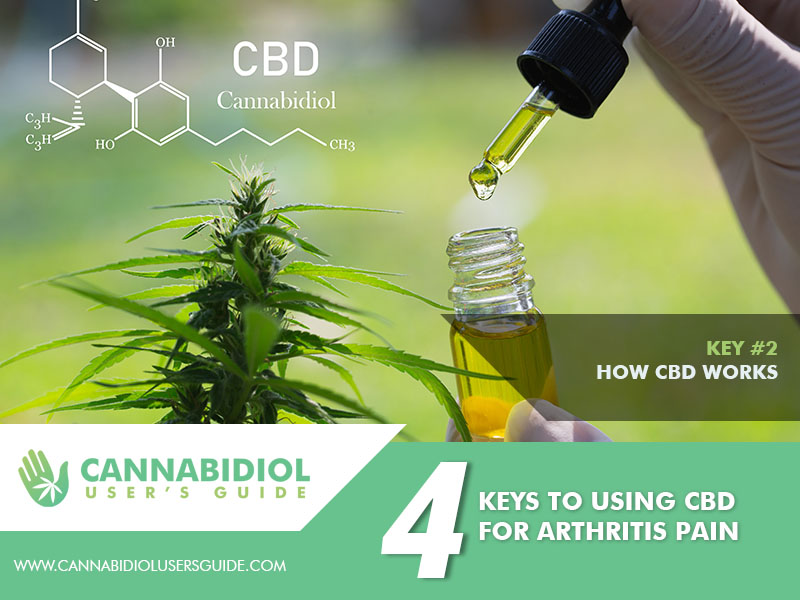
Animal studies, human models, and clinical testing show that CBD affects the endocannabinoid system in the brain and body. The endocannabinoid system maintains homeostasis or balance of the chemicals that affect many essential functions. These include pain, memory, mood, appetite, stress, sleep, metabolism, immune function, and reproduction.
CBD acts on the receptors to help balance neurochemicals. CBD mainly affects CB1 receptors in the brain, and CB2 receptors are mostly found in the immune system. By regulating these receptors, CBD reduces or increases the number of neurochemicals needed for proper physical and mental functioning. CBD also has antioxidant, anti-inflammatory, and antibacterial properties. As an anti-inflammatory, CBD can help reduce the swelling and pain from arthritis.
3
The Study Results
Research shows that CBD decreases arthritis pain. Here are the recent studies' reports. A 2011 study found that CBD helped reduce inflammatory pain in rats by affecting the way that pain receptors respond to stimuli, and a 2014 review of the existing body of research on animals concluded that CBD might be an effective treatment for arthritis. A 2016 study found that the topical application of CBD had the potential to relieve pain and inflammation associated with arthritis, and a 2017 study found that CBD might be a safe and useful treatment for arthritis joint pain. A 2008 review of research into CBD and its possible mechanism of action suggested that CBD could play a role in chronic pain management.
Scientists also studied the side effects of CBD use. Compared to many prescription medications, CBD has fewer side effects, and its side effects are often milder. Potential side effects of CBD include fatigue, diarrhea, changes in appetite, and changes in weight.
The "grapefruit effect" refers to the interaction between some prescription medications and grapefruit or grapefruit juice. Grapefruit can cause certain medications to not break down properly in the body, leading to liver damage. Research shows that CBD may have a similar effect. If you plan on or are using CBD, you should tell your doctor so they can check your medications and liver function if needed.
4
The Forms Of CBD
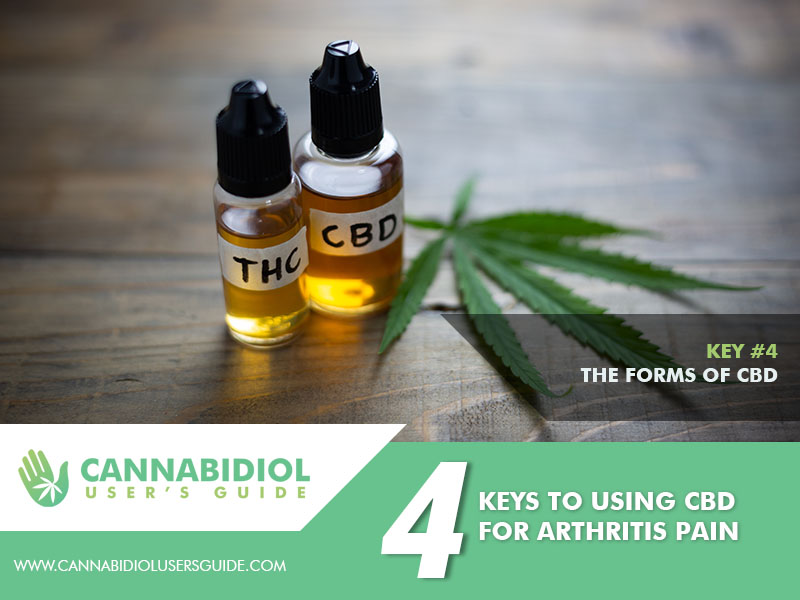
CBD is available as oil placed under the tongue, pills, and topical cream. There is also a vape form of oil that is smoked. CBD edibles are cookies or candies that contain CBD. CBD is sold online and at gas stations, vape shops, health food stores, and retail CBD stores.
There is no regulation for how much CBD a product contains. Reputable sellers should have independent research and review of their products available for consumers, certifying how much CBD they contain. The concentration of CBD can vary widely between different products and manufacturers.
Now, you know how CBD can help with arthritis. This article has gone over how CBD can be used for arthritis and how the compound works in general. Then, we discussed some studies surrounding CBD and a few possible side effects. Finally, we closed with the forms you can find CBD in and the available ways to take them.
For people with arthritis, CBD can be an effective pain relief method. Because it is readily available and has few side effects, many people use it for pain relief. Trying CBD for arthritis may be the step you need to take to suffer less pain.