

The potential use of medical marijuana for treatment purposes has been heavily studied over the last several decades. Researchers have discovered that medical marijuana can reduce the severity of conditions like anxiety, cancer, Alzheimer's disease, and eating disorders. Pre-existing conditions would likely make most Americans eligible for a medical marijuana prescription from their doctors. So why is it that only 4.5 million Americans are pursuing this treatment method? That may be due to concerns and reluctance within the medical profession.
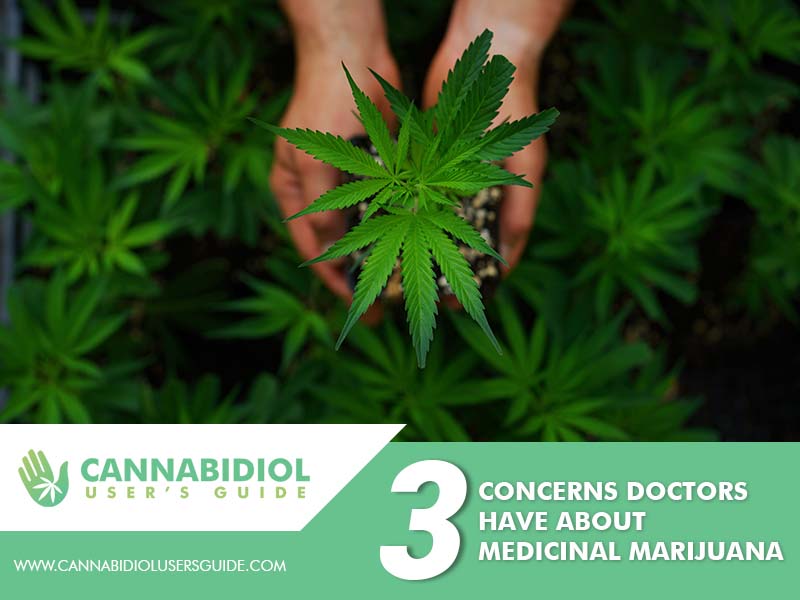
Read on to learn more about some of the concerns professionals have regarding medical marijuana. First, we'll talk about laws, both federal and state. Then, we'll go over the difficulties of prescribing medical marijuana to children, and we'll close with concerns surrounding addiction.
1
Federal Vs. State Law
The legal aspect of medical marijuana is one of the most widely reported reasons that doctors are hesitant to prescribe the drug. At the federal level, marijuana is considered a "Schedule I" drug. This means that there isn't enough research yet to prove that the drug has a medical role. This is a concept reviewed in the AMA Journal of Ethics.
Right now, medical marijuana is entirely legal in 33 states in America, with another 15 states legalizing THC-restricted marijuana. Despite the legal status in most U.S. states, the fact that medical marijuana isn't legal at the federal level is enough to make doctors nervous. There seems to be federal pressure to avoid prescribing the substance in some states, placing doctors in a position where they're potentially risking their license with the Drug Enforcement Agency (DEA). Unfortunately, this deprives many people dealing with a severe illness of treatment.
2
Medical Marijuana & Children
One of the biggest concerns that doctors have about medical marijuana is the prescription of the drug among pediatric patients. While it's clear that many children deal with painful and debilitating conditions like epilepsy and cancer, the risks of medical marijuana aren't clear. However, there has been a little bit of research into this topic, as seen in a study published in The Journal of Pediatric Pharmacology and Therapeutics.
This type of prescription has been shown to reduce seizure frequency by up to 33% in epileptic children. There's also evidence that medical marijuana is a possible treatment method for reducing self-injury, hyperactivity, and irritability among children with autism. Other studies have found that it's particularly effective in children with cancer struggling with appetite and fatigue.
There are a few reasons that doctors are hesitant to prescribe this drug to children. There's the risk of accidental intoxication, as seen in 1,378 pediatric patients over six years who ended up in the emergency room with symptoms like breathing difficulties and lethargy. Plus, the drug is just simply under-studied in the medical world thus far, making it risky to prescribe.
3
The Risk Of Addiction
Medical marijuana is meant to reduce the severity of symptoms and improve the quality of life in patients with severe health conditions. The problem is that, according to the National Institute on Drug Abuse, about nine percent of marijuana users will eventually develop a dependency. Though marijuana isn't a drug as addictive as substances like heroin or cocaine, the body and mind both begin to depend on the drug to function normally. With that, suddenly stopping use may eventually cause withdrawal symptoms, like sleep problems, low appetite, and mood issues after quitting.
Medical marijuana can also be problematic in the sense that marijuana is considered a gateway drug. There's the potential that you'll build up a tolerance to the drug, desire more, pursue illegal options, or decide to use other, more intense drugs. It's a vicious cycle.
Now, you hopefully better understand why some people are worried about medical marijuana. First, we discussed federal and state laws. Then, we went over the difficulties of prescribing medical marijuana to children. Finally, we ended up with some concerns surrounding addiction.
Medical marijuana can be a great tool when it comes to treating medical conditions. But there's a lot more research that needs to be done to convince doctors to prescribe the drug without hesitation. Though a bit different than medical marijuana, CBD products can be a possible alternative if your doctor recommends against medical marijuana.